.svg)
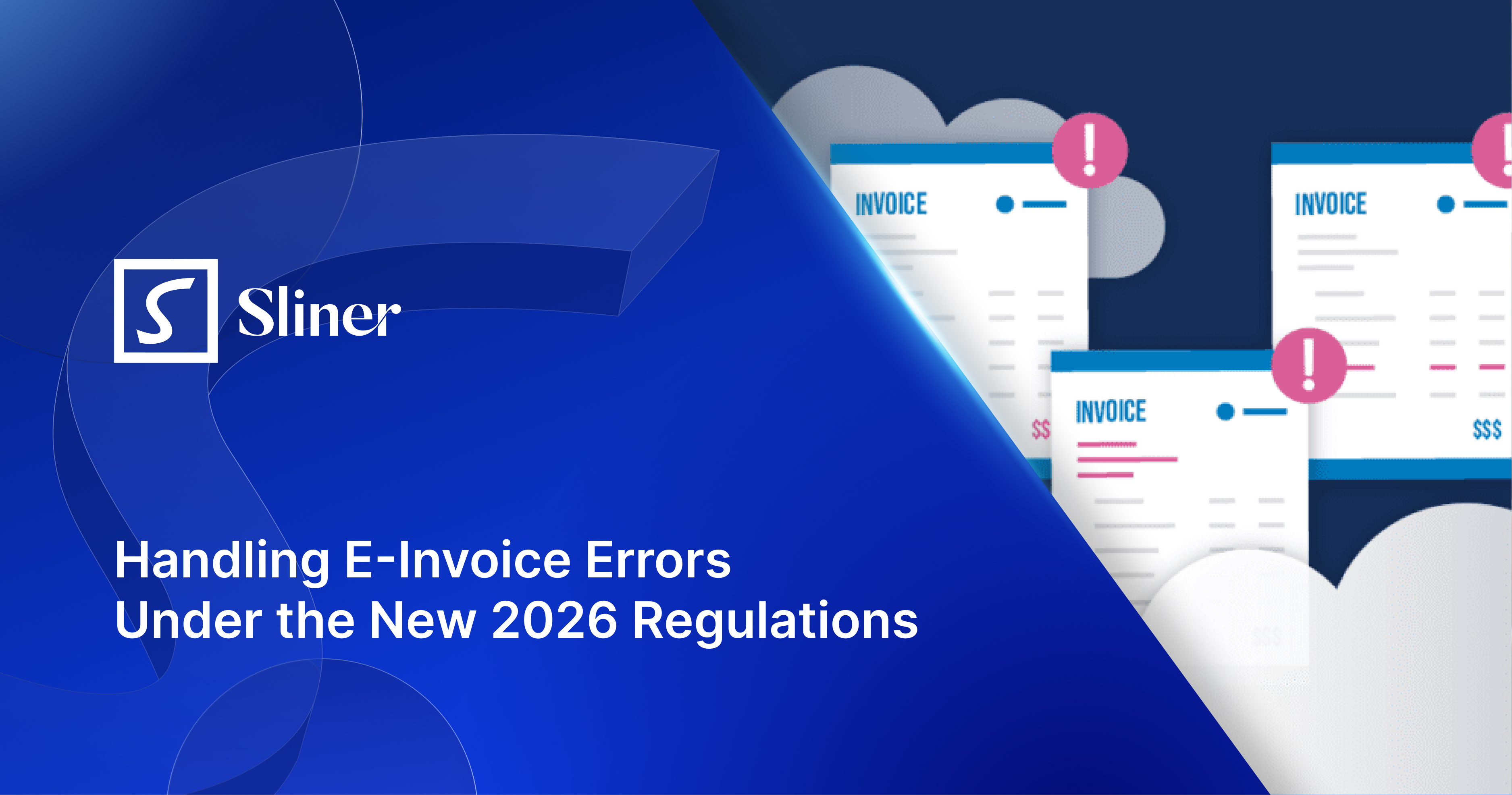
For Vietnamese e-commerce sellers, hundreds or even thousands of electronic invoices (e-invoices) may be issued each month. At this volume, errors such as an incorrect buyer name, tax identification number, or invoice amount are difficult to avoid. In practice, the real risk lies not in the error itself, but in whether it is handled in accordance with the regulations.
Invoice errors that are not properly addressed may lead to discrepancies between invoice data, tax declarations, and accounting records. Depending on the nature of the violation, Vietnamese businesses may also face risks related to VAT deductions, deductible expenses, or administrative penalties for invoice and tax violations. From 01/07/2026, if an invoice has already been adjusted or replaced and another error is subsequently identified, all further corrections must follow the same method used for the first correction. Vietnamese businesses should therefore consider the initial method carefully to avoid having to continue with an unsuitable approach in later corrections.
1. New Vietnamese legal framework for handling invoice errors from 01/07/2026
On 30/06/2026, the Ministry of Finance (MOF) issued Circular 91/2026/TT-BTC, providing guidance on the 2025 Law on Tax Administration and Decree 254/2026/ND-CP on electronic invoices and electronic records. The Circular took effect on 01/07/2026. The handling of invoice errors is regulated under Article 10 of Circular 91/2026/TT-BTC and applies to both e-invoices issued with a tax authority code and e-invoices without a tax authority code whose data has already been transmitted to the tax authority. Circular 91 also clearly states that the Vietnamese seller is responsible for handling invoice errors.
The method for handling incorrectly issued electronic invoices is primarily determined by the nature of the error and the type of invoice. Businesses should refer to Points a, b, and c of Clause 1, and Clause 6, Article 10 of Circular No. 91/2026/TT-BTC to determine whether the error requires notification only, allows a choice between issuing an adjustment or replacement invoice, requires a replacement invoice, or permits only an adjustment invoice.
2. Principles for handling errors by type of information
2.1. Incorrect information that does not require a new invoice
If the invoice only contains an incorrect buyer name or address, an incorrect amount written in words, or other errors, but the tax identification number, amount, tax rate, tax amount, and goods stated on the invoice remain correct, the seller is not required to issue a new invoice.
The Vietnamese seller only needs to notify the buyer that the invoice contains an error and submit a notification to the tax authority using Form 04/SS-HDDT in Appendix III of Circular 91/2026/TT-BTC. Businesses may also refer to and download Form 04/SS-HDDT together with the summary table of correction principles for reference when handling invoice errors.
2.2. Incorrect information that may be corrected by an adjustment invoice or replacement invoice
If an invoice contains an error in any of the following information, the seller may choose to issue either an adjustment invoice or a replacement invoice:
-
The buyer’s tax identification number (MST).
-
The name of the goods, or goods stated on the invoice with incorrect specifications or quality.
-
The amount, tax rate, or tax amount stated on the invoice.
-
Other mandatory information, except for an incorrect buyer name, address, or amount written in words.
An adjustment invoice must include the wording "Adjustment for invoice Form No.... serial... No.... dated... month... year...". A replacement invoice must include the wording "Replacement for invoice Form No.... serial... No.... dated... month... year...". After the new invoice is digitally signed, if it is an invoice without a tax authority code, the seller sends it directly to the buyer. If it is an invoice with a tax authority code, the seller must first submit it to the tax authority for coding before sending it to the buyer.
2.3. Incorrect information that requires a replacement invoice
In Vietnam, the seller must issue a replacement invoice, without the option to choose between an adjustment invoice and a replacement invoice, in two cases: e-invoices generated from cash registers and invoices for goods that are assets subject to registration of ownership or usage rights. For assets that have already been registered in the buyer’s name and are subsequently returned, if the buyer is an entity required to use e-invoices, the buyer issues a return invoice to the seller in accordance with Point c.2, Clause 5, Article 10 of Circular 91/2026/TT-BTC.
|
Type of error
|
Correction method
|
Required procedure
|
|
Incorrect name, address, or amount written in words (no impact on tax)
|
No new invoice required
|
Notify the buyer and submit Form 04/SS-HDDT to the tax authority
|
|
Incorrect MST, goods, amount, tax rate, or tax amount
|
Choose adjustment or replacement
|
Prepare a written agreement (if required), digitally sign, and send to the buyer or tax authority
|
|
Invoices generated from cash registers; assets subject to registration
|
Replacement required
|
Prepare a written agreement (if required), digitally sign, and send to the buyer or tax authority
|
|
Invoices without a form code, serial, or invoice number
|
Adjustment only
|
Prepare a written agreement (if required), digitally sign, and send to the buyer or tax authority
|
3. Distinguishing adjustment invoices from replacement invoices
Both adjustment invoices and replacement invoices are valid methods, but they differ in nature and in how they are reflected in the accounting records:
|
Criterion
|
Adjustment invoice
|
Replacement invoice
|
|
Nature
|
Records the difference from the original invoice
|
Issues a new invoice containing all correct information to replace the original invoice
|
|
How values are recorded
|
Issue an adjustment e-invoice referencing the original incorrect invoice. For value adjustments, increases must be recorded as positive amounts and decreases as negative amounts.
|
Issue a new electronic invoice to replace the incorrect invoice, including a reference to the invoice being replaced.
|
|
Mandatory case
|
Issue a new electronic invoice to replace the incorrect invoice, including a reference to the invoice being replaced.
|
For e-invoices generated from cash registers or invoices for the sale of assets requiring registration of ownership or usage rights, sellers must issue replacement invoices if errors are discovered after issuance, except in the cases specified in Clause 5.
|
|
Suitable when
|
The discrepancy is concentrated in amount, quantity, or tax
|
Multiple items are incorrect and a document showing the complete correct information is needed
|
When using these two types of invoices, two principles should be applied consistently. First, if an invoice has been adjusted or replaced and another error is later identified, all subsequent corrections must follow the same method used for the first correction. Second, for amounts stated on an adjustment invoice, the seller must clearly record a positive or negative value, consistent with the actual adjustment.
Because the correction method cannot be changed in subsequent corrections, the method used to handle an invoice error should be considered with the accounting team from the outset rather than left solely to operational staff.
4. Handling invoice errors when data is submitted through the Summary Table
For Vietnamese businesses that transmit invoice data to the tax authority through the E-Invoice Data Summary Table (Form 01/TH-HDDT), the process differs in two respects:
-
If an incorrect invoice has already been included in a submitted Summary Table, the seller provides the adjustment or replacement information directly in the Summary Table for subsequent periods and does not submit Form 04/SS-HDDT.
-
If data in a submitted Summary Table is missing or incorrect, the seller submits a supplementary Summary Table, fully stating the invoice form code, serial, and invoice number in Column 18, "related invoice information" (except where otherwise provided by the regulations). Omitting information from Column 18 is a common error and may prevent the tax authority from linking the supplementary data to the original invoice.
5. Mandatory procedures before issuing an adjustment or replacement invoice
5.1. Written agreement with the buyer
If the buyer is a Vietnamese economic organization, another organization, a household business, or an individual business, the seller and buyer must prepare a written agreement identifying the incorrect information before the seller issues an adjustment or replacement invoice. If the buyer is an individual, the seller may notify the buyer directly or publish a notice on the seller’s website, if available. The written agreement between the buyer and seller regarding the adjustment or replacement of the invoice must be retained by the entity and presented upon request by the tax authority.
Circular 91/2026/TT-BTC does not require a written agreement in the following three cases:
-
The seller transmits invoice data using the E-Invoice Data Summary Table (Point a.1, Clause 3, Article 16 of Decree 254/2026/ND-CP).
-
The seller transmits data using the Detailed Transaction Information Table (Point a.2, Clause 3, Article 16 of Decree 254/2026/ND-CP).
-
The sale and purchase of goods is conducted on e-commerce platforms and other digital platforms. This third case significantly reduces procedural requirements for marketplace sellers when handling invoice errors. However, exemption from the written agreement does not mean exemption from the correction requirement: an incorrect invoice must still be adjusted or replaced in accordance with the prescribed process.
5.2. Combining multiple incorrect invoices within the same month
If, within the same month, the seller makes the same error in information such as the buyer, product name, unit price, quantity, or tax rate across multiple invoices issued to the same buyer, the seller may issue one adjustment invoice or replacement invoice for multiple invoices and attach a list using Form 01/BK-DCTT in Appendix III of Circular 91/2026/TT-BTC. This provision is particularly useful for businesses with repeated transactions with the same customer, as it avoids having to repeat complex procedures for the same type of error.
6. Process for handling invoice errors for e-commerce sellers
Based on the principles above, Vietnamese businesses can standardize their internal process for handling invoice errors into the following five steps:
-
Step 1, identify the exact nature of the error and the invoice type: determine whether the error falls under Point a, b, or c of Clause 1, while also reviewing the provisions of Clause 6.
-
Step 2, review the invoice's adjustment and replacement history: if an invoice has previously been adjusted or replaced, subsequent corrections within the same invoice chain must follow the method used for the initial correction.
-
Step 3, determine the procedures required before correcting the invoice: check whether the error requires a written agreement, notification to the buyer, or qualifies for an exemption from these requirements. At the same time, determine whether the conditions for applying Form 01/BK-ĐCTT are met.
-
Step 4, select the appropriate correction method based on the nature of the error: for cases falling under Point a, the seller must notify the buyer and submit Form 04/SS without issuing a new invoice. For cases under Points b or c, the seller must issue an adjustment or replacement invoice, without automatically being required to submit Form 04/SS. For invoices previously reported through the Invoice Summary Statement, corrections must be made directly on the statement without submitting Form 04/SS.
-
Step 5, update accounting records and tax declarations based on the identified errors: adjust only the information actually affected, rather than assuming that every invoice error requires changes to reported revenue or declared VAT amounts.
For sellers operating across multiple marketplaces, many errors arise because marketplace order data and invoicing data have not been automatically reconciled. Preventing errors at the source is therefore generally more effective than correcting them after invoices have been issued. Businesses with a high volume of invoices should also review tax risks and filing structures to reduce the risk of systematic discrepancies.
How GenInvoice supports the handling of invoice errors
The handling of invoice errors under Circular 91/2026/TT-BTC centers on one key question: does the error change the tax obligation? In addition, selecting the appropriate method from the first correction is important because it ensures consistency in subsequent corrections and helps maintain the legal validity of the invoice.
Sliner supports e-commerce sellers in automating e-invoice issuance from marketplace data, reconciling orders with invoices, and handling invoice errors in accordance with the new regulations, thereby helping businesses reduce the risk of expenses being disallowed or taxes being assessed. In addition, Genbook, a sales data standardization platform, has developed GenInvoice, a solution that is particularly effective in handling invoice errors by maintaining a complete audit trail of original, adjustment, and replacement invoices. Learn more about Genbook’s GenInvoice invoice storage and error-handling capabilities, or contact the Sliner team for advice on a process suited to your business model.
![[GenInvoice Feature Launch] New E-Invoice Regulations: Key Updates](https://cms.sliner.sg/storage/uploads/blogs/VgtR89il7arLN7vIKbvl6ia6juyhaemLAL6Pzgnt.jpg)