.svg)
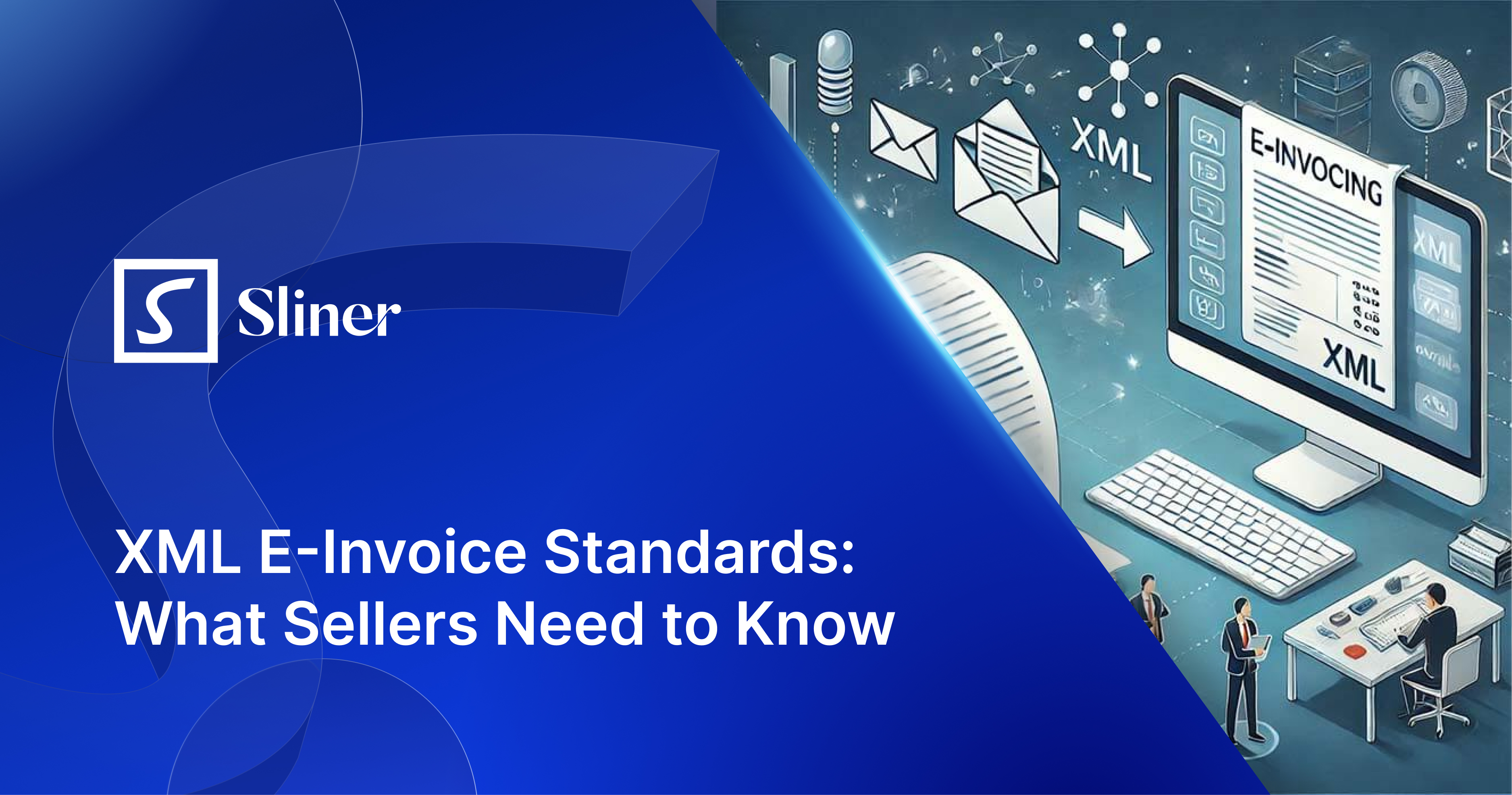
Most e-commerce sellers work with invoices through PDF files received from software or service providers. However, A PDF is only a version of the invoice for viewing and record-keeping. The legally valid record used by the tax authority for reconciliation is the XML file accompanied by a digital signature.
From 01/7/2026, Circular 91/2026/TT-BTC replaces Circular 32/2025/TT-BTC and redefines the current e-invoice standards. Sellers do not need to write XML themselves, but they need sufficient understanding to verify that their service provider is implementing the requirements correctly, identify errors before the data is sent to the tax authority, and determine exactly what needs to be retained.
1. E-Invoice Standard
Under Article 3 of Circular 91/2026/TT-BTC, the e-invoice standard is a technical standard that specifies the data type and data length of each information field for three purposes: transmission, storage, and display of invoices. This standard uses XML (eXtensible Markup Language), a text-based formatting language created to share electronic data between different information technology systems.
Defining the required format is not merely a formal requirement; it also helps standardize how invoice data is stored, transmitted, and reconciled. When all invoices in the market follow a common e-invoice standard, tax authorities can process the data automatically and reconcile reported revenue against actual invoice data without manual intervention. For sellers, this means that discrepancies in revenue and invoice data can be identified earlier and more quickly than in the past, when paper invoices were still widely used.
1.1 Two Mandatory Components of the E-Invoice Format
The e-invoice format consists of two components: one containing invoice transaction data and one containing digital signature data. For e-invoices bearing a tax authority code, the file includes a third component containing data related to the tax authority code. This structure forms the core of the e-invoice standard.
The Tax Department develops and publishes the business data component and transmission methods, and also provides a tool for displaying invoice contents. The digital signature component is implemented in accordance with the law on electronic transactions. Businesses may not define their own structures: all invoice software must follow the structure published by the Tax Department for consistent application.
1.2 The Representation Does Not Replace the Original XML File
The Circular requires e-invoices to display all required information accurately and clearly, in a format that buyers can read using electronic devices. A PDF or printed version is merely a representation of the XML data and is not the invoice itself.
In practice, when retaining supporting documents for tax finalization or explanations, the XML file is the original record that must be kept, rather than the PDF. Many sellers only download the PDF and store it on cloud storage, overlooking the XML file. When tax authorities request a reconciliation, they may have to go back to their service provider to retrieve the XML, while the explanation period under the Circular is typically only 03 working days.

2. Form Symbols and Invoice Symbols
The e-invoice standard assigns each invoice an identification code consisting of a form symbol (one character) and an invoice symbol (six characters). Reading these seven characters is the quickest way to check whether an invoice has the correct type, year, and code-issuance mechanism.
2.1 Form Symbols
|
Form Symbol
|
E-Invoice Type
|
|
No. 1
|
VAT e-invoice
|
|
No. 2
|
Sales e-invoice
|
|
No. 3
|
E-invoice for sale of public assets
|
|
No. 4
|
E-invoice for sale of national reserve goods
|
|
No. 5
|
Electronic stamps, electronic tickets, electronic cards, electronic receipt vouchers, and other electronic documents containing invoice content
|
|
No. 6
|
Electronic warehouse release and internal transportation note; electronic warehouse release note for goods sent to agents for sale
|
|
No. 7
|
E-commerce invoice
|
|
No. 8
|
VAT e-invoice integrated with a receipt for collection of taxes, fees, and charges
|
|
No. 9
|
Sales e-invoice integrated with a receipt for collection of taxes, fees, and charges
|
In particular, exporting businesses should confirm with their service provider whether their transaction falls under form number 1 or form number 7 before issuance. Choosing the wrong form symbol means the entire batch of invoices will have to be reprocessed.
2.2 Invoice Symbols
Character 1 (1 letter)
-
C indicates an e-invoice with a tax authority code
-
K indicates an e-invoice without a tax authority code.
Characters 2 and 3 (2 numbers)
The last two digits of the calendar year in which the invoice is issued. For example, an invoice issued in 2026 is shown as 26.
-
Character 4 (1 letter)
One letter from the group T, D, L, M, N, B, G, H, X, F indicating the type of invoice used
-
T is an invoice registered for use by an enterprise, organization, household business, or individual business
-
L is an invoice issued by the tax authority for each occurrence
-
M is an invoice generated from a cash register
-
X is an e-commerce invoice
-
F is a VAT invoice integrated with a tax refund declaration.
Characters 5 and 6 (2 letters)
The seller determine according to management needs by themselves. If there is no need to distinguish multiple forms within the same invoice type, YY is used.
For example, under Appendix I of the Circular: 1C26TAA is a VAT invoice with a tax authority code, issued in 2026 and registered for use by an enterprise; 7K26XAB is an e-commerce invoice without a tax authority code, issued in 2026. On the invoice, the form symbol and invoice symbol appear in the upper right corner or another readily identifiable position.
3. Invoice Data Transmission Routes to the Tax Authority
Invoice data submitted to the tax authority follows one of two routes: it is sent directly from the business's system or through an e-invoice service provider. The e-invoice standard sets different technical requirements for each method.
3.1 Direct Submission
-
Connect to the Tax Department through a leased line or an MPLS VPN Layer 3 connection, consisting of one primary transmission channel and one backup channel, each with a minimum bandwidth of 5 Mbps.
-
Use an encrypted Web Service or Message Queue (MQ) as the connection method.
-
Use the SOAP protocol to package and transmit data.
After the tax authority accepts the registration, the business has 05 working days to notify the Tax Department to coordinate the connection; the testing process lasts 10 working days from the date the Tax Department receives the request. If testing is unsuccessful, the business must change its registration and transmit data through an intermediary organization.
3.2 Submission Through a Service Provider
Most sellers choose the second method, meaning that compliance quality depends on the provider. Circular 91/2026/TT-BTC sets minimum requirements for organizations providing e-invoice data receiving, transmission, and storage services:
-
Legal entity: established under Vietnamese law, with at least 05 years of operation in the information technology sector; information on its e-invoice and e-document services must be publicly disclosed on the organization's website.
-
Financial capacity: a deposit at a bank lawfully operating in Vietnam, or a guarantee issued by such a bank, of no less than VND 05 billion to resolve risks and compensate for damages that may arise during service provision.
-
Personnel: at least 20 staff holding a university degree in information technology.
-
Technical capacity: operation on a primary data center and a backup data center located at least 20 km apart; the ability to detect, alert on and prevent unauthorized access and cyberattacks; a data backup and recovery system; and a connection to the Tax Department via a leased line, an MPLS VPN Layer 3 channel or equivalent, comprising 01 primary channel and 02 backup channels, each with a minimum bandwidth of 20 Mbps.
The list of organizations meeting these requirements is published by the Tax Department on its website. Before signing a contract, businesses should cross-check the provider's name against this list rather than relying solely on sales materials.
3.3 Summary Tables and Detailed Transaction Information Tables
Not every case requires each invoice to be submitted individually. Certain groups of taxpayers submit data in summary tables: the E-Invoice Data Summary Table (Form No. 01/TH-HĐĐT), Detailed Transaction Information Table (Form No. 01/TTGD), Revenue Summary Table (Form No. 01/TH-DT), and Electronic Receipt Data Summary Table (Form No. 01/TH-BLĐT).
If data in a submitted summary table is missing or incorrect, the seller submits a supplementary summary table instead of using the standard error notification. This is an easy point for businesses with high transaction volumes on e-commerce platforms to mishandle, as data is aggregated by period rather than by individual order.
4. Invoice Issuance Authorization and Foreign Organizations Selling Through Digital Platforms
The marketplace selling model often results in a third party issuing invoices on behalf of the seller. The Circular 91/2026/TT-BTC permits authorization, subject to three conditions:
-
The authorization must be documented in writing (a contract or agreement), clearly specifying the invoice type, form symbol, invoice symbol, purpose, term, and payment method for the authorized invoices.
-
The tax authority must be notified using Form No. 01/ĐKTĐ-HĐĐT, because the authorization is considered a change to the registered information for e-invoice use.
-
Both parties must post the authorization on their respective websites, the store interface, or the platform's system so that buyers are aware of it; when the authorization term expires, the notice must be removed.
Invoices issued by the authorized party must show the name, address, and tax identification number of both the authorizing party and the authorized party, and must be consistent with the VAT calculation method of the authorizing party.
For foreign organizations conducting business or providing services through e-commerce platforms or other digital platforms, the Circular 91/2026/TT-BTC allows voluntary registration to use e-invoices through the Tax Administration Information System. Cross-border sellers operating through foreign legal entities should review their operations to ensure timely compliance with the latest legal requirements.
5. Handling Incorrect Invoices
Once an XML file has been digitally signed and submitted, it cannot be edited directly. Therefore, the seller to issue a new document instead of modifying the original document, and the situations are divided into two groups.

5.1 Non-Material Errors
If the name, address, amount in words, or other content is incorrect but the tax identification number, amount stated on the invoice, tax rate, tax amount, and goods are correct, the seller notifies the buyer and submits Form No. 04/SS-HĐĐT to the tax authority. The invoice does not need to be reissued.
5.2 Material Errors
If the tax identification number, product name, specifications, quality, amount, tax rate, tax amount, or other mandatory content is incorrect, the seller may choose one of two methods: issue an adjustment invoice, including the wording “Adjustment to invoice Form No.... symbol... No.... dated...”, or issue a replacement invoice, including the wording “Replacement for invoice Form No.... symbol... No.... dated...” .
Three notable principles when handling incorrect invoices:
-
Once an invoice has been processed by adjustment or replacement, any subsequent processing of that same invoice must use the method applied the first time.
-
The amount on an adjustment invoice must be stated as a positive number for an upward adjustment and a negative number for a downward adjustment, consistent with the actual adjustment.
-
Within the same month, if multiple invoices contain the same errors in buyer information, product name, unit price, quantity, or tax rate, the seller may issue one common adjustment or replacement invoice, accompanied by a list using Form No. 01/BK-ĐCTT.
For the sale and purchase of goods on e-commerce platforms and other digital platforms, the seller is not required to prepare a written agreement with the buyer before making an adjustment or replacement. This significantly reduces the processing workload for sellers handling thousands of orders each month. For tax declaration, the seller declares in the period in which the adjustment invoice arises, while the buyer declares in the period in which the adjustment invoice is received.
6. GenInvoice – The Solution for Automated E-Invoicing
The electronic invoice format is an output standard, not an input standard. For e-commerce sellers, invoice data comes from multiple marketplaces, various types of fees, different currencies, and different settlement cycles. Sliner helps sellers automate the e-invoicing process directly from order data by integrating with e-commerce marketplaces such as Amazon and Etsy. This includes identifying eligible orders and the correct timing for invoice issuance, processing buyer information in line with mandatory data requirements, and reconciling invoice data with the actual revenue recorded in the accounting books.
Learn more about Genbook’s sales data standardization services, together with GenInvoice - a feature that analyzes sales data and automatically creates and issues invoices in batches - or contact Sliner to have our professional team review your store’s current invoice issuance process.