.svg)
1. What Is a Profit & Loss Statement (P&L)?
When starting an eCommerce business, almost every seller asks the same question: “Am I actually making money this month?” This is also the stage where many businesses begin monitoring revenue dashboards on Shopee, TikTok Shop, or Lazada and feel optimistic about their growth. However, this is also where many eCommerce sellers confuse “revenue” with “actual profit.”
For example, imagine a Korean skincare shop receiving around 200 orders during its first month and generating 50 million VND in revenue. At first glance, the dashboard numbers look very promising. But after calculating all expenses such as inventory costs, marketplace fees, advertising, shipping, returns, and operational expenses, the business is left with only 1.5 million VND in net profit. This means the actual net profit margin is only around 3% of total revenue.
This is exactly why the Profit & Loss Statement (P&L) is one of the most important financial reports for eCommerce businesses. While revenue only shows how much a store sells, a P&L report reveals how much profit the business actually keeps after deducting all operating costs.
2. Understanding the Profit & Loss Statement (P&L)
A Profit & Loss Statement (P&L), also known as an Income Statement, is a financial report used to measure business performance over a specific period of time. It summarizes three core components of a business: revenue, expenses, and actual profit.
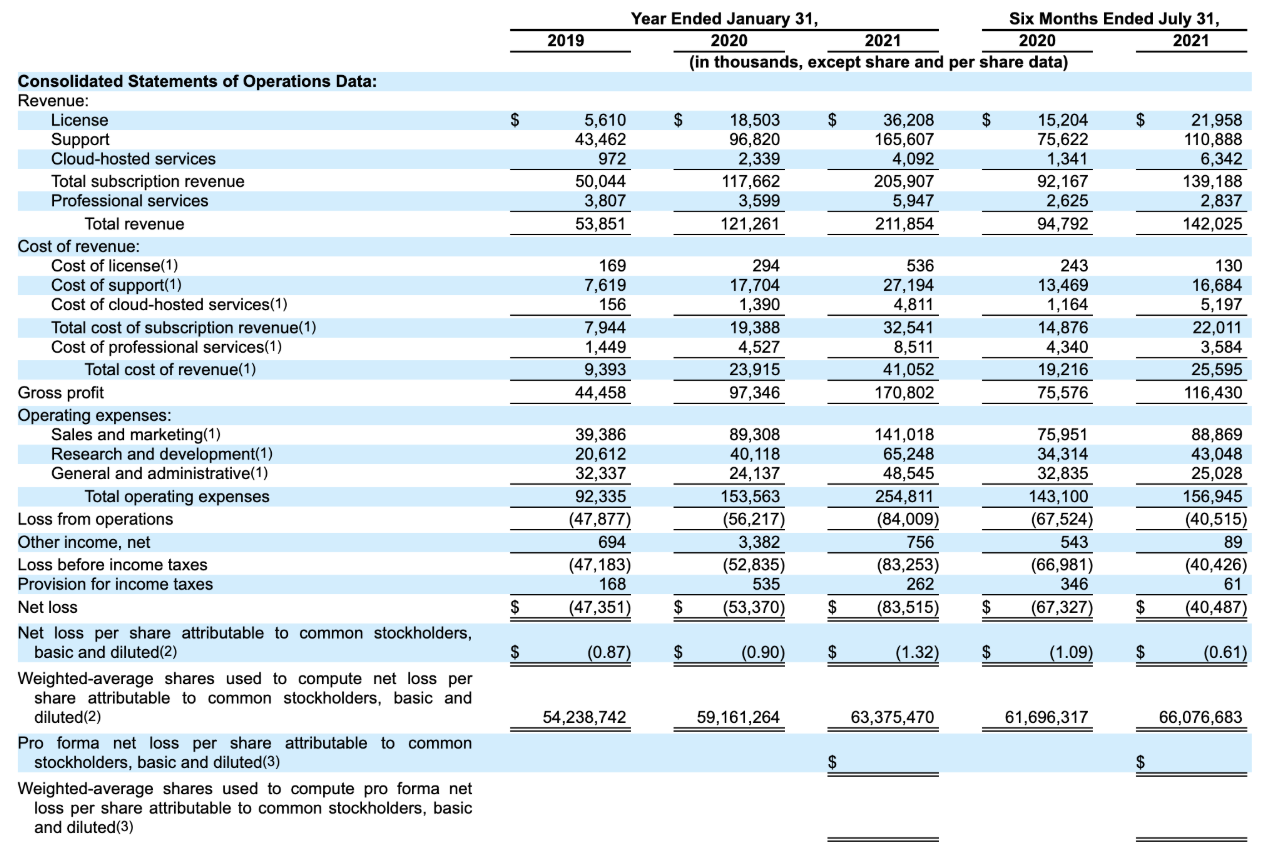
Simply put, a P&L works like a “financial report card” for a business. It not only shows whether the company is growing, but also reflects the quality of earnings behind the sales numbers.
At its core, the logic behind a P&L is straightforward:
Revenue – Cost of Goods Sold = Gross Profit Gross Profit – Operating Expenses = Net Profit
In this structure:
-
Revenue refers to the total sales generated
-
Cost of Goods Sold (COGS) refers to product sourcing or manufacturing costs
-
Gross Profit is the amount remaining after deducting product costs
-
Operating Expenses include advertising, marketplace commissions, shipping fees, payroll, warehousing, returns, and other operational costs
-
Net Profit is the final amount the business actually keeps
For eCommerce sellers, net profit is the most important number because it reflects the real financial performance of the business.
3. High Revenue Does Not Always Mean High Profit
In eCommerce, sellers constantly see daily revenue numbers on their dashboards, which often creates the impression that the business is “making a lot of money.” In reality, revenue is only the starting point of the financial picture.
Behind every order are multiple hidden costs. Besides product costs, businesses also spend heavily on advertising, vouchers, marketplace fees, payment processing, shipping subsidies, returns, and operational staffing. Many of these expenses are not clearly reflected on marketplace dashboards.
This is why many online stores experience rapid sales growth without seeing meaningful profit improvement. Some businesses continue increasing monthly revenue while struggling with cash flow issues, low margins, or uncertainty about whether they are truly profitable.
Without properly tracking a Profit & Loss Statement (P&L), businesses can easily fall into a cycle of being “busy but not profitable.” Orders continue growing, ads continue running, and sales continue increasing, yet the actual financial results remain far below expectations.
4. Why P&L Matters for Multi-Channel eCommerce Businesses
As businesses expand across platforms such as Shopee, TikTok Shop, Lazada, or their own websites, tracking P&L becomes even more important because every sales channel has a completely different cost structure.
One platform may generate very high revenue but deliver extremely low profit margins due to expensive advertising or high return rates. Meanwhile, another channel with lower revenue may actually generate stronger profitability.
If businesses only focus on total revenue, it becomes difficult to identify which channel is truly contributing financial value. In many cases, sellers continue investing heavily into channels that appear to be growing while those same channels are quietly reducing overall profitability.
Tracking P&L by sales channel allows businesses to:
-
Identify which channel generates the strongest profits
-
Monitor products with low profit margins
-
Control operational costs that reduce profitability
-
Evaluate whether advertising campaigns are financially effective
This creates a stronger foundation for operational optimization, cost control, and data-driven growth decisions instead of relying purely on assumptions.
5. Does P&L Represent Actual Cash on Hand?
One of the most common misconceptions among eCommerce sellers is believing that profit automatically means cash availability.
A Profit & Loss Statement (P&L) only measures business performance over a certain period. It does not show how much cash the business currently has in its bank account.
For example, a business may record revenue while waiting for marketplace payouts. The company may also be purchasing inventory, prepaying advertising costs, or managing outstanding supplier payments. In these situations, the business may appear profitable on paper while still experiencing cash flow pressure.
That is why businesses also need additional financial reports such as:
-
Cash Flow Statements
-
Balance Sheets
These reports provide a more complete picture of financial health. However, P&L remains the first foundational report every eCommerce seller should understand in order to know whether the business is truly profitable.
6. How Should eCommerce Businesses Build an Effective P&L?
For many eCommerce sellers, the biggest challenge is not generating sales, but understanding whether the business is actually profitable. As operations scale, financial data from multiple platforms such as marketplaces, advertising channels, payment systems, and logistics providers becomes significantly more complex to manage.
To build an effective Profit & Loss Statement (P&L), eCommerce businesses need a system that consolidates and standardizes financial data across all sales channels. Instead of only tracking total revenue, businesses should clearly separate each cost category to understand where profit is gained, and where it is lost.
This is where Sliner can support eCommerce sellers. Sliner is designed to help businesses build a more structured financial management system and gain clearer visibility into their P&L performance. The platform helps sellers centralize data and break down the full cost structure behind each transaction, including cost of goods sold (COGS), marketplace fees, advertising costs, shipping expenses, vouchers, refunds, and other operational expenses.
With a clearer P&L structure, businesses can:
-
Track the actual profit generated by each store or sales channel
-
Identify which platforms or products are performing most effectively
-
Control expenses that are reducing profit margins
-
Evaluate advertising and operational efficiency more accurately
-
Optimize growth strategies based on real financial data instead of revenue alone
More importantly, Sliner does not only help businesses aggregate financial data, but also supports the development of a more transparent and scalable reporting system — helping eCommerce brands prepare for sustainable long-term growth and expansion.
Conclusion
In eCommerce, high revenue does not always mean a business is operating efficiently. What truly matters is not how many orders a store generates, but how much profit the business is actually able to retain in the end.
A Profit & Loss Statement (P&L) helps businesses understand the quality of profit behind revenue growth, identify costs that are reducing profit margins, and gain a clearer view of overall business performance.
For eCommerce sellers, this is not just an accounting report but also an essential management tool to improve operations, optimize growth, and build a sustainable financial foundation in the long term. In addition, using financial and data management platforms such as GenBook can help businesses track data more accurately, automate reporting processes, and make faster, more effective business decisions.
![[Event recap] Aryon Go Global P2P Sharing in Hanoi: Building a Strong Foundation for Global Growth](https://cms.sliner.sg/storage/uploads/blogs/UYObLQvk3FfWpll6PQOWKlvoRIoTLWV2bXhokSXo.jpg)
![[Event Recap] Coffee Talk: Financial Management Models for E-commerce Businesses in the U.S. Market](https://cms.sliner.sg/storage/uploads/blogs/ptvdZYj1o5hl5iBIufIhuAx4TVLJ0YzVq6egssCN.jpg)