.svg)
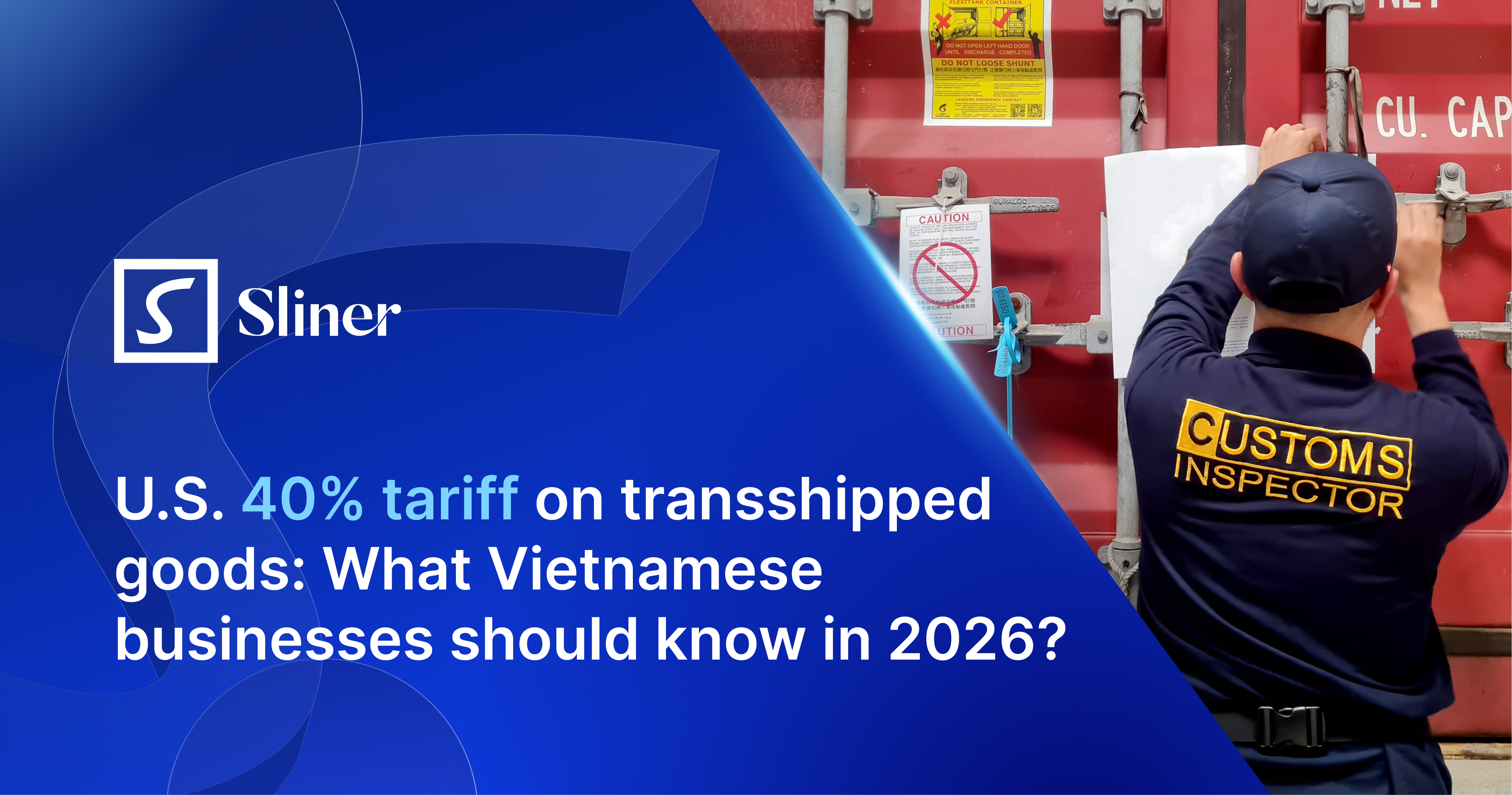
The 40% rate was announced in Executive Order 14326 on July 31, 2025. Executive Order 14389 ended IEEPA additional tariffs, including the amended Executive Order 14257 action, on February 20, 2026.
* Businesses should check the applicable tariff schedule on the date of importation. This article does not constitute advice for any specific shipment.
A shipment exported from Vietnam is not automatically of Vietnamese origin. When inputs, components, or finished goods move through several countries, the importing authority may examine where substantive production occurred, what processing was performed, and whether the records agree, rather than relying only on the final port of export. If supplier data, factory capacity, product codes, and transport documents do not align, a business may need to substantiate origin even when it holds ordinary commercial paperwork.
The 40% transshipment tariff attracted attention after the United States announced the measure in 2025. The rate should not, however, be presented as a charge that now applies automatically to every product routed through Vietnam. Businesses need to distinguish the historical measure from origin controls, origin-based duties, and declaration penalties that may still apply.
1. How was the 40% transshipment tariff announced?
On July 31, 2025, the United States issued Executive Order 14326, later published in the Federal Register. Section 3 provided that an article determined by U.S. Customs and Border Protection (CBP) to have been transshipped to evade duties under Section 2 could face the 40% transshipment tariff on an ad valorem basis, in place of the additional country-of-origin rate. The order also referred to other duties, charges, and penalties.
The VietnamFinance analysis of circumvention investigation risks describes the 2025 policy context and the pressure on Vietnamese businesses to substantiate origin. That context remains useful for risk identification, but it must be read together with later legal developments.
1.1. Status of the 40% rate from February 2026
On February 20, 2026, Executive Order 14389 ended additional ad valorem duties imposed under the International Emergency Economic Powers Act (IEEPA), including Executive Order 14257 and related amendments. Because the 40% transshipment tariff in Executive Order 14326 was structured to replace the additional rate under Section 2, the 2026 order means that the 40% rate is no longer an IEEPA additional duty collected automatically under the 2025 mechanism.
This change does not remove the obligation to declare origin correctly. Executive Order 14389 states that other duties, including Section 232 and Section 301 measures, are unaffected. Businesses should therefore check the Harmonized Tariff Schedule of the United States (HTSUS), product classification, and any applicable trade-remedy program on the entry date instead of using a rate taken from an older news report.
1.2. The 2026 report shows that scrutiny is increasing
In August 2026, the White House published The Great Transshipment Scam. The report places Vietnam in a group of economies with significant trade scale and integration with China-linked supply chains. One analysis cited in the report screened $51.1 billion of potentially illegally transshipped imports from February 2025 to February 2026 across 27 countries and priority six-digit Harmonized System (HS6) categories.
The figures and risk tiers in the report are enforcement-screening tools, not findings of wrongdoing against an individual company. Although the legal basis for the 40% transshipment tariff has changed, the increasing use of transaction data, shipping routes, and factory capacity to screen risk makes origin records a central export-control issue.
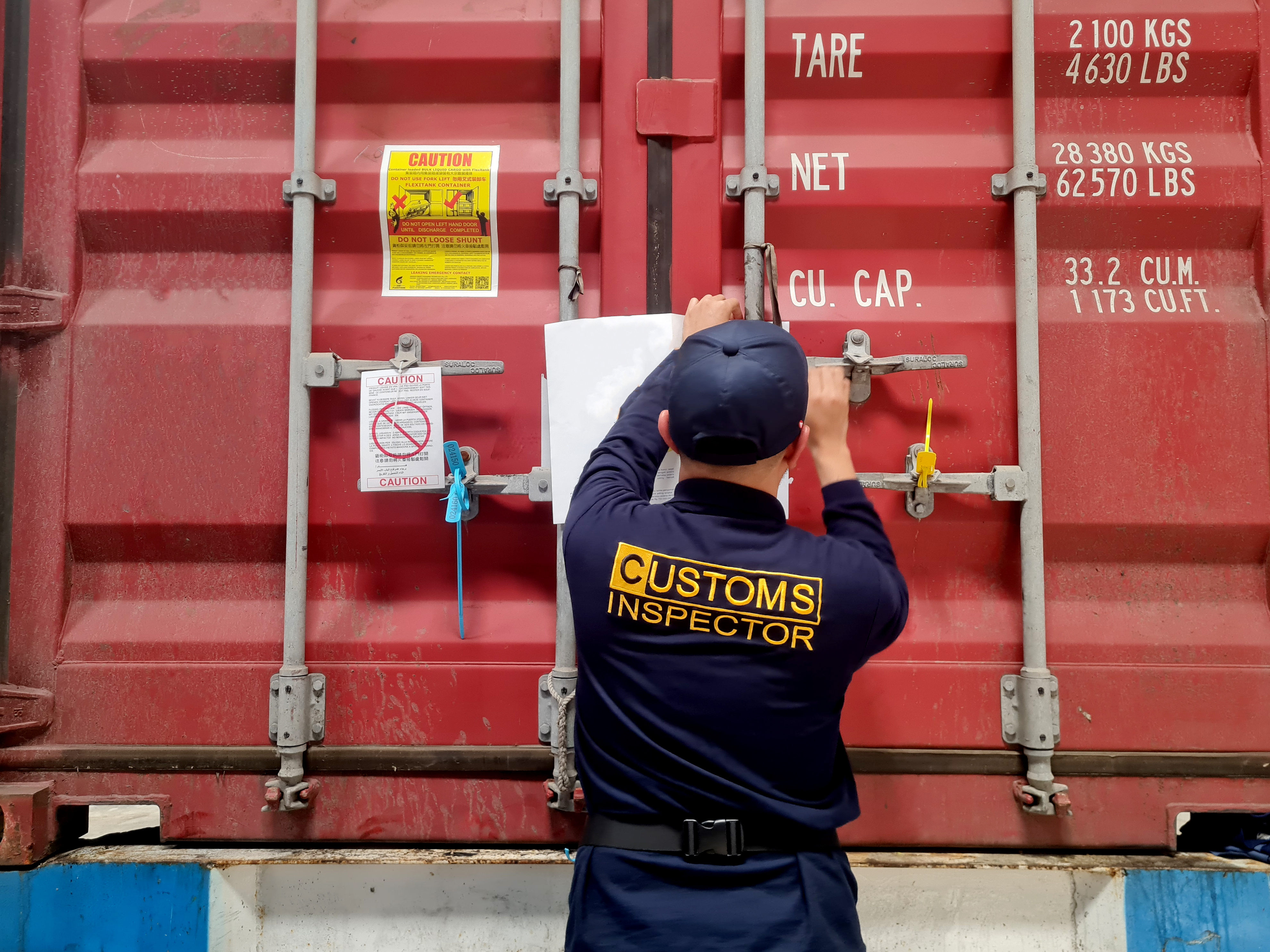
2. How do U.S. authorities determine origin and evasion?
2.1. Country of export is not always country of origin
The country of export is the location from which goods are shipped; the country of origin is where the goods were produced or underwent processing that satisfies the applicable origin rule. CBP’s Section 301 guidance explains that Section 301 duties are based on origin, not merely the exporting country. Changing a bill of lading, invoice, label, or shipping route does not by itself change origin.
Where no product-specific rule controls, customs authorities may consider whether processing in an intermediate country resulted in a substantial transformation. The assessment may consider the nature of the product, manufacturing steps, inputs, function, and outcome after processing. No single local-value percentage determines origin for every product.
2.2. Legitimate routing differs from tariff evasion
Goods may move through a bonded warehouse, distribution center, or processing facility in a third country for legitimate operational reasons. Risk arises when routing, documentation, or processing is used to conceal the true origin or avoid a trade measure. This distinction separates ordinary international logistics from illegal transshipment.
The White House report describes repackaging, relabeling, testing, light assembly, and documentation changes as activities that may require closer review where they do not create a substantial transformation. The 40% transshipment tariff should therefore not be assessed by asking only whether goods passed through Vietnam. The relevant question is whether the activity in Vietnam changed origin under the applicable rule.
3. Why must Vietnamese businesses control origin records?
Vietnam has a large manufacturing and logistics network and also uses substantial imported inputs and components. The model creates supply-chain advantages, but it requires businesses to document clearly the value and production carried out locally. Decree No. 31/2018/ND-CP establishes Vietnam’s origin framework, while Circular No. 39/2018/TT-BCT governs inspection and verification of records and manufacturing facilities.
A certificate of origin (C/O) is one part of the file; it does not replace the complete production evidence. An authority or importer may request a bill of materials (BOM), purchase invoices, consumption standards, production orders, machine logs, labor records, inventory ledgers, and shipping data to test consistency.
The Vietnam Ministry of Industry and Trade’s origin-management report also emphasizes electronic C/O processes, connected data, and traceability technology. For a business, the practical consequence is that the 40% transshipment tariff is only one layer of risk. Inability to substantiate origin can also delay clearance, remove preferential treatment, create reassessments, or affect customer relationships.
4. Which indicators can increase investigation risk?
No single indicator automatically proves a violation. Inconsistent data can nevertheless cause a shipment or business to be selected for closer review. The risk of an anti-circumvention investigation generally rises when several factors appear together:
-
HS classifications, descriptions, weight, or value change unexpectedly between imported inputs and exported finished goods.
-
Export volume rises sharply without corresponding changes in equipment, labor, electricity use, or factory capacity.
-
Dwell time in Vietnam is too short for the declared production process.
-
Local activity consists mainly of packing, relabeling, sorting, or simple assembly.
-
Suppliers, producers, and buyers are related, but pricing or contract terms lack support.
-
The C/O, invoices, customs declarations, bills of lading, and warehouse data do not describe the same goods flow.
The consequence is not limited to the historical 40% transshipment tariff. Goods may be assigned a different country of origin, become subject to Section 301 duties, antidumping and countervailing duties (AD/CVD) where covered, or be detained for verification. Under 19 U.S.C. Section 1592, material false statements or omissions in import transactions may lead to civil penalties; in a fraud case, the statutory maximum can reach the domestic value of the merchandise.
Businesses should not wait for an information request before reconstructing origin data. When records are produced by several teams and suppliers, rebuilding the chain months later is generally more costly than controlling it at the transaction date.
5. A compliance process before exporting to the United States
An effective process connects legal origin analysis with purchasing, production, inventory, and logistics data. The objective is not only to avoid the 40% transshipment tariff, but also to substantiate the origin of each product code when a customer, bank, customs authority, or investigating agency requests evidence.
5.1. Map origin by product code
Businesses should prepare a BOM, identify the origin of each material input, document the operations carried out in Vietnam, and test the relevant rule in the destination market. If a product relies on Chinese inputs, the file should identify which steps change the product’s name, character, or use and why those changes matter for origin.
5.2. Reconcile records before issuing a C/O
The control should cover contracts, invoices, goods-received notes, production orders, consumption standards, import declarations, export declarations, bills of lading, and payment data. Circular No. 39/2018/TT-BCT allows records and manufacturing facilities to be inspected and verified. A certificate of origin should therefore be supported by auditable data rather than a declaration prepared in isolation by one department.
5.3. Maintain traceability data
Circular No. 02/2024/TT-BKHCN regulates product and goods traceability management. Businesses can use quick response (QR) codes, lot numbers, production logs, and digital records to connect inputs to finished goods. Technology supports evidence; it cannot prove origin when the underlying data are incomplete or incorrect.
|
Control area |
Key records |
Indicator to resolve |
Recommended action |
|---|---|---|---|
|
Supplier |
Contracts, invoices, import declarations, origin statements |
Entity names or input countries do not align |
Verify the supplier and lock the source data |
|
Production |
BOM, consumption standards, work orders, machine and labor logs |
Capacity does not support export volume |
Test capacity and evidence of actual processing |
|
Export documents |
C/O, invoice, packing list, declaration, bill of lading |
HS code, weight, or description differs |
Reconcile before filing and document adjustments |
|
Traceability |
Lot codes, inventory data, QR data, shipping history |
Inputs cannot be linked to finished batches |
Establish an audit trail by product code |
Before opening a new route or changing suppliers, a business should conduct a product-level legal and customs review. If processing occurs in several countries, substantial transformation and the possible effects of Section 301 or AD/CVD should be assessed separately. This approach reduces origin fraud caused by weak processes and creates evidence to distinguish substantive production from illegal transshipment.
6. Review origin before every supply-chain change
The 40% transshipment tariff demonstrates that tariff exposure can arise from how goods are produced, recorded, and routed, not only from where an invoice is issued. The IEEPA-based 40% rate is no longer collected under the 2025 mechanism, but origin substantiation and anti-circumvention investigation risks still require data-based controls.
The 40% tariff is no longer an additional IEEPA tariff automatically imposed following EO 14389. However, the risk of a “transshipment determination” remains under the current enforcement framework. U.S. Customs and Border Protection (CBP) still has the authority to determine transshipment violations and impose penalties based on other applicable legal grounds.
Sliner supports businesses in reviewing transaction structures, document flows, and cross-border tax implications through Corporate Structuring and Tax Planning. Accounting Automation helps standardize purchasing, inventory, production, and payment data for reconciliation.
Businesses can contact Sliner to assess the data process before changing suppliers, shipping routes, or export markets.